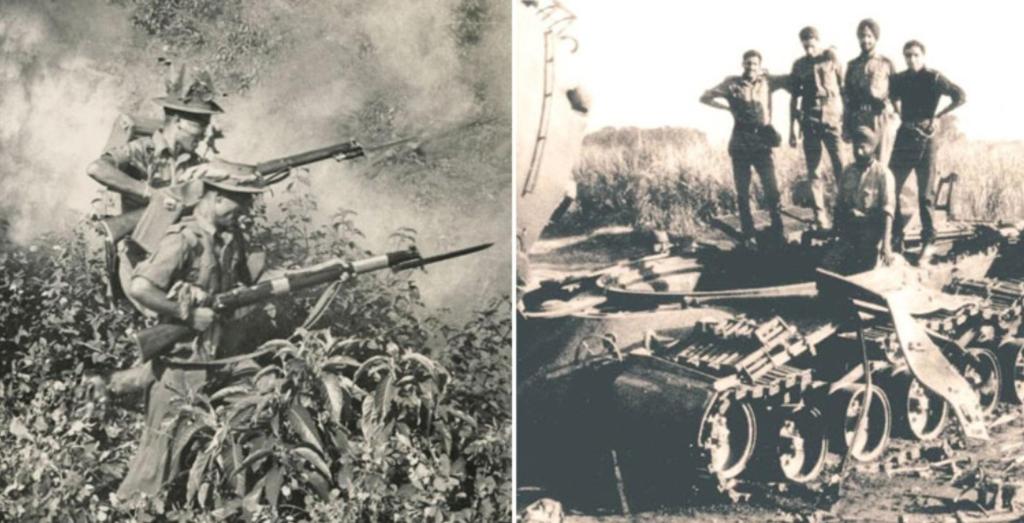
Indo-Pakistani War of 1965

Source : Google

The Indo-Pakistani War of 1965 or the Second Kashmir War was a culmination of skirmishes that took place between April 1965 and September 1965 between Pakistan and India.

The 1965 war between India and Pakistan was the second conflict between the two countries over the status of the state of Jammu and Kashmir. The clash did not resolve this dispute, but it did engage the United States and the Soviet Union in ways that would have important implications for subsequent superpower involvement in the region.

Encouraged by the results of Sino-Indian conflict of 1962, Pakistan tried to seek a solution to the Kashmir problem with a military confrontation with India in 1965, but it ended with an Indian triumph and a ceasefire agreement between the two countries on September 23, 1965.

The Pakistani army back then had an edge over the Indian counterpart in terms of armour, artillery, airpower and looked to use this opportunity to emphasize their claim over the Kashmir valley. The conflict started in early 1965 over territorial borders claims and things slowly started getting intensifies. In August, the hostilities grew to intense levels after Pakistan tried to claim Kashmir by force, however, their intention was crushed down by the brave Indian Army.

The hostile situation between the two countries in South Asia garnered attention from the international community and United Nations called upon the two countries to resolve the Kashmir problem through dialogue. The UN security council passed Resolution 211 on September 20, 1965, urging the countries to come together for a dialogue. The United States of America and the UK extended their support for this resolution and immediately cut on the supplies of arms to both countries.

The effects of the decision were immediately felt on the confrontation, especially with Pakistan’s dependency on the US for the ammunition supply. Both Indian and Pakistan agreed upon a cease-fire agreement that came into effect on September 23.

Later, Indian and Pakistan sat down for negotiation in Tashkent with mediation by the Soviet Union. Finally, in January 1966, both sides agreed on giving up the territorial claims and withdrawing their armies. While the Tashkent agreement achieved its short-term aim of ending the conflict in South Asia, the conflict was soon reignited in 1971 and has continued for decades now.

The Indo-Pak War of 1971 ended with breaking away of East Pakistan into a new country Bangladesh with help of the Indian Army.
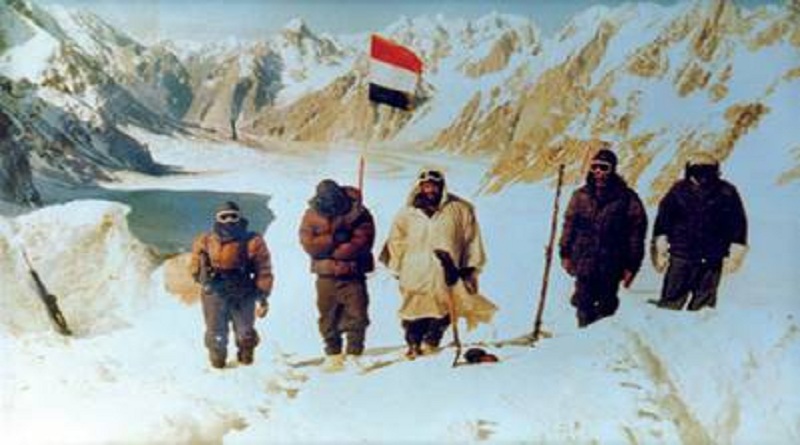
Operation Meghdoot 13 April 1984

Source : Google

Operation Meghdoot was the codename for the Indian Armed Forces’ operation to seize control of the Siachen Glacier in Kashmir, precipitating the Siachen conflict. Executed in the morning of 13 April 1984 in the highest battlefield in the world, Meghdoot was the first military offensive of its kind.

April 13, 1984, was when India first deployed its men at Siachen. Thirty four years on, with 163 casualties in the past decade and nearly 900 overall, the soldiers continue to remain on this icy, barren land.

The story of Siachen didn’t start in 1983. Its genesis lies in the partition of India and the ensuing wars between India and Pakistan over Kashmir. At the end of the UN-brokered ceasefire in 1949, India and Pakistan agreed on a ceasefire line (CFL) in undivided Kashmir as per the Karachi Agreement of 1949. The eastern most stretch of the ceasefire line was not demarcated beyond a point called NJ9842 since it was inhospitable and uninhabited. It simply said that from NJ9842, the line would run “thence North to the glaciers” — the Siachen glacier, the Rimo and the Baltoro.

As the late Lt General S K Sinha, who was the secretary of the Indian delegation, later wrote, “No one at that time thought that military operations could take place at the forbidding heights beyond NJ9842. In any case, the ceasefire line was only something temporary. After plebiscite, it would become irrelevant. Thus, we drew a straight line running north from NJ9842 to the glaciers. It is easy to be wise after the event. It would have been better if the line beyond NJ9842 had not been left vague.”

The 1949 ceasefire line was revalidated as the Line of Control (LoC) by the Suchetgarh Agreement of December 1972, in accordance with the Simla Conference. The LoC closely assimilated military advances made by either side in J&K in the 1971 war but did not make any changes to the line beyond NJ9842. Uninhabited, the area was considered beyond the ambit of any military operations by both sides.

But Pakistan had begun making certain cartographic changes to the ceasefire line after the 1962 war which were soon reflected by the US defence mapping agency, a global benchmark for cartography. Between 1964 and 1972, Pakistan began depicting the ceasefire line as extending from NJ9842 to a point just west of the Karakoram Pass, not northwards as the agreement said. Global mountaineering maps soon started portraying this as the authentic and internationally accepted CFL-LoC, backed by mountaineering legends.

it had become obvious to the Indian side that Pakistan army was getting ready to physically move into the Siachen glacier. Intelligence reports had spoken of Pakistani troop movements towards Siachen while R&AW had picked up information on Pakistan army buying large quantity of high-altitude gear from Europe. India then decided to act swiftly in order to prevent Pakistan from occupying the Siachen glacier. The move was approved by Prime Minister Indira Gandhi.

The task of occupying the Saltoro ridge was given to 26 Sector, commanded by Brigadier Vijay Channa, who was tasked with launching the operation between April 10 and 30. He chose April 13, supposedly an unlucky date, because it was the Baisakhi day, when the Pakistanis would be least expecting the Indians to launch an operation.

At 5.30 am on April 13, the first Cheetah helicopter, carrying Captain Sanjay Kulkarni and one soldier, took off from the base camp. By noon, 17 such sorties were flown and 29 soldiers were heli-dropped at Bilafond La. Soon, the weather packed up and the platoon was cut off from the headquarters. The contact was established after three days, when five Cheetah and two Mi-8 helicopters flew a record 32 sorties on April 17 to Sia La. That same day, a Pakistani helicopter flew overhead to see Indian soldiers already deployed at the glacier.

Soon the whole glacier was secured, in an operation christened Meghdoot. Lt General Chibber wrote in an official note: “The two main passes were sealed off. The enemy was taken completely by surprise and an area of approximately 3,300 sq km, illegally shown as part of PoK on the maps published by Pak and USA were now under our control. The enemy had been pre-empted in their attempt to occupy the area claimed by them.” The glacier continues to be occupied till date.

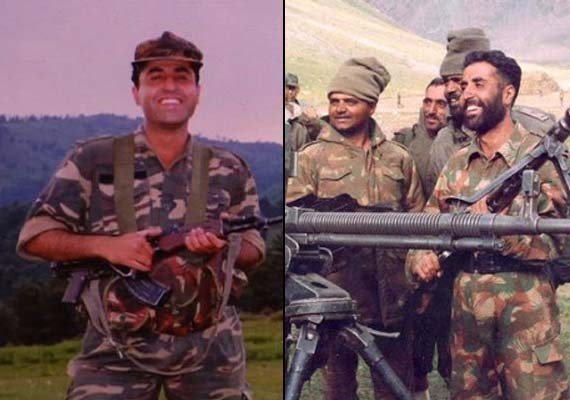
Saurabh Kalia Indian military officer

Source: Google

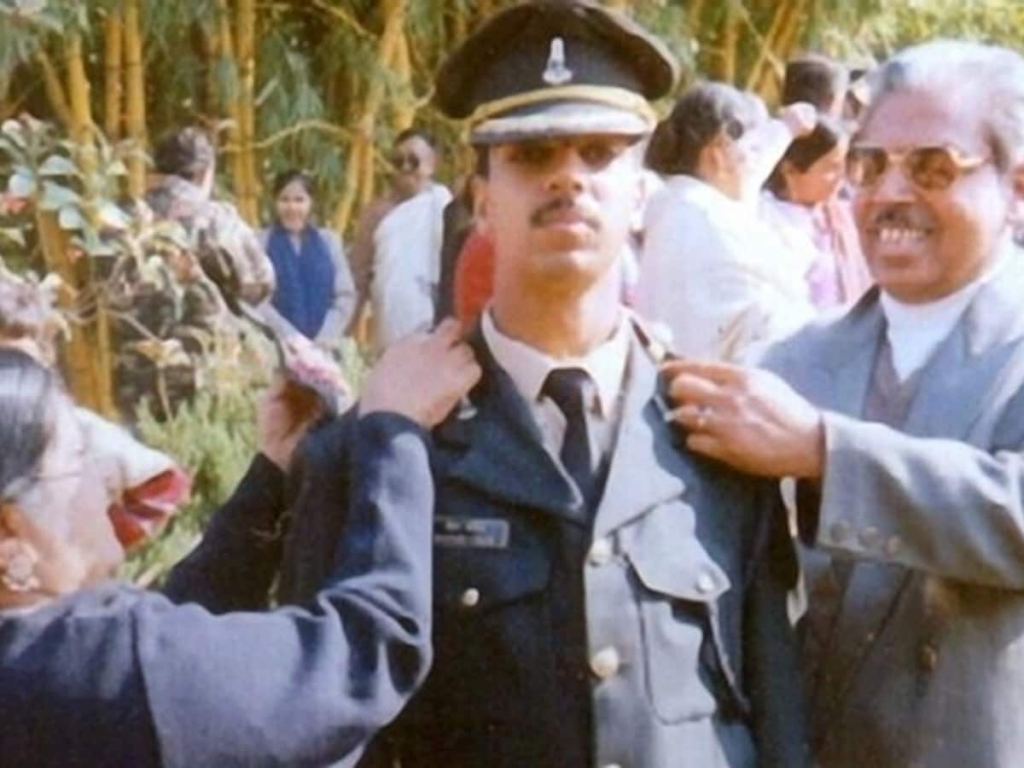
Saurabh Kalia was an officer of the Indian Army who was killed during the Kargil War while being held as a prisoner of war by the Pakistan Army.

Born on June 29, 1976, Saurabh Kalia, son of a senior scientist, became the first martyr in the Kargil war after he was captured by the Pakistani Army even before the full-fledged war had started. He, along with five other jawans, was kept hostage for 20 days, and thereafter his badly mutilated body was handed over to the Indian army. 22 years on, Saurabh’s father is still fighting a relentless, single-handed fight to get justice from the Supreme Court for his martyr son against the brutal and highly provocative action of the Pakistani army, which is also against a  war crime under the Geneva Convention.

Capt Kalia was commissioned in December 1998 in the 4 Jat Regiment (Infantry), got his posting at Kargil just two months. He and five soldiers were sent to  Bajrang Post at a height of 14,000 feet to check infiltration in the Kaksar area. It was here he was captured by the Pakistani army before being violently tortured and killed. 

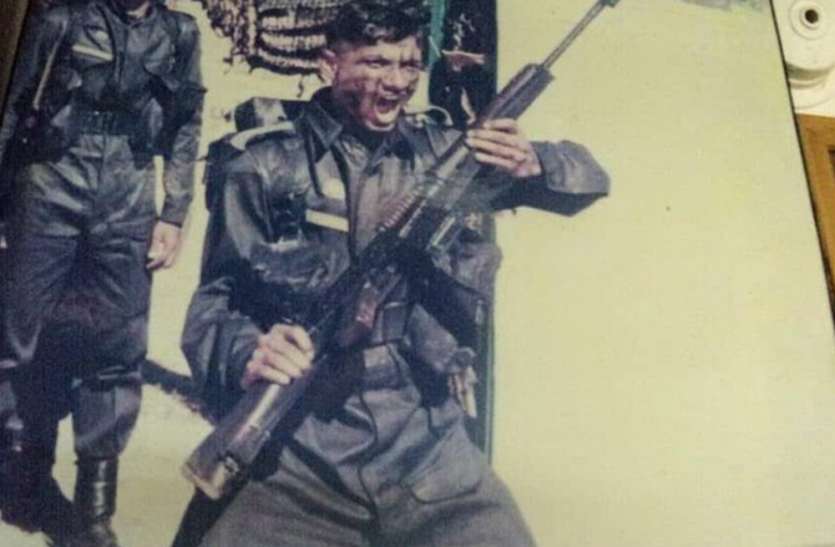
Vikram Batra Indian military officer

Captain Vikram Batra (Source: Google)

Captain Vikram Batra, PVC was an officer of the Indian Army. He was posthumously awarded the Param Vir Chakra, India’s highest and most prestigious award for valour, for his actions during the 1999 Kargil War, during which he led one of the most difficult mountain warfare operations in Indian military history.

September 9 marks the birth anniversary of Captain Vikarm Batra who died in the Kargil war. Born on September 9, 1974, in Ghuggar village near Palampur in Himachal Pradesh, Captain Vikram Batra was from a humble middle-class background. He was immensely popular among his classmates and teachers, and was an all-rounder at school. He was also a keen sportsman and used to take part in all the co-curricular activities.

From the sub-sectors of Drass and Batalik, Captain Vikram Batra’s Delta Company were ordered to recapture one of the most arduous and crucial peaks, peak 5140 on June 19.

Nicknamed Sher Shah, he along with his Delta Company decided to attack the enemy by surprise from the rear. At a height of 17,000 feet, Captain Batra and his men planned to approach the hill from the rear, so as to take his enemies by surprise. They ascended the rocky cliff but as they neared the top, the Pakistani defenders pinned them on the face of the cliff with machine gunfire.

Captain Vikram Batra alone killed three soldiers in close combat and despite being badly injured during the exchange; he regrouped his men and continued the mission. Despite being seriously injured, he inspired his team to fulfil their mission. The point 5140 was captured at 3:30 am on June 20, 1999.

He was given the nation’s highest gallantry award, Param Vir Chakra posthumously for his outstanding courage, steadfast resolve, leadership, and supreme sacrifice.

Manoj Kumar Pandey

Captain Manoj Pandey (source: Google)

Captain Manoj Kumar Pandey, PVC was an officer of the Indian Army who was posthumously awarded India’s highest military honour, the Param Vir Chakra, for his audacious courage and leadership during the Kargil War in 1999

Captain Manoj Pandey, belonged to Rudha village in Kamlapur tehsil of Sitapur district in Uttar Pradesh. Son of Shri Gopi Chand Pandey and Smt Mohini Pandey,  Capt Manoj was the eldest among three brothers and a sister. Even as a child he was quite gutsy and would often amaze the elders with his acts of bravery. Despite having gutsy temperament, he was good in academics too. He studied from UP Sainik School, Lucknow wherein his dream of joining the Army took firm shape and the foundation of his future life was laid.

He had a keen interest in sports too and excelled in boxing and bodybuilding in particular. Subsequently, he got selected to join the National Defence Academy in his pursuit of realizing his dream of donning the Army uniform as an officer. He joined the 90th course of NDA and got commissioned into 1/11 Gorkha Rifles of the Indian Army, a unit known for its gallant soldiers and various heroic exploits.

Prior to his selection, during his Services Selection Board (SSB) interview, the interviewer had asked him, “Why do you want to join the Army?” He had immediately replied, “I want to win the Param Vir Chakra.” True to his words, Capt Manoj Kumar Pandey did win the country’s highest gallantry award but unfortunately did not live to receive it in person. After commissioning, his first assignment was in the Kashmir valley and thereafter he was posted to Siachen. Whilst in Siachen he received orders to move to Batalik sector, where the first intrusions by the Pakistani forces were detected and the Army was preparing for a well-coordinated retaliatory action.

By early May 1999, Pakistani forces had intruded well across the LOC, in the Mushkoh, Drass, Kaksar, and Batalik sectors. The extent of penetration across the LOC varied from 4 to 8 kms in each sector. In many vital points, neither artillery nor air power could dislodge the enemy forces, who were not in the visible range. The Indian forces had no option but to send up the soldiers for direct assaults which were slow and took a toll. One such mission was planned in the Batalik sector and 1/11 GR was assigned the task to take over Khalubar. The task was given to the ‘B’ company of 1/11 GR wherein Capt Manoj was commanding Platoon No 5. Earlier Capt Manoj was also part of the team which had captured Jaubar Top and established the first post there.

On the night of 2/3 July 1999, Capt Manoj along with his troops marched off for the Pahalwan Chowki located at a height of 19700 feet on his way to Khalubar. As the assault team moved ahead, it faced heavy and intense enemy fire from both sides of the hillock. Capt Manoj quickly moved his platoon to an advantageous position under intense enemy fire, sent one section to clear the enemy positions from the right and himself proceeded to clear the enemy positions from the left. Capt Manoj fearlessly charged ahead with the booming battle cry, “Jai Mahakali, Aayo Gorkhali” clearing two enemy bunkers. While clearing the third bunker a barrage of bullets hit him on the shoulder and legs. Undaunted and without caring for his grievous injuries, he continued to lead the assault on the fourth bunker and destroyed the same with a grenade. As he hit his target he himself got hit in the forehead with a bullet. Capt Manoj later succumbed to his injuries and was martyred at the age of 24  years.

Kargil War Memorial

The Kargil War Memorial, also known as Dras War Memorial, is a war memorial built by the Indian Army in the town of Dras, commemorating the 1999 Kargil War between India and Pakistan. The memorial is located on the Srinagar-Leh National Highway 1D, about 5 km from the city centre across the Tiger Hill.

Source : Google

As an act of apt recognisation to the supreme sacrifice made by our brave soldiers during ‘Operation Vijay’, the Kargil War Memorial was constructed at “Ground Zero” location at Dras in year 2004. It comprises of Amar Jawan Jyoti, Manoj Pandey Gallery and the Veer Bhoomi .


At the Amar Jawan Jyoti, a torch is lit round the clock and in all weather conditions in recognisation of supreme sacrifice of these brave soldiers. The Manoj Pandey Gallery was initially constructed as a photo arcade in the year 2009. Subsequently in the year 2012, ‘Hut of Remembrance’ was added in line of ‘Hut of Remembrance’ at the National Defence Academy wherein names of all the martyrs (559) are recorded. The Photo Gallery has a board dedicated to each unit which participated in ‘Operation Vijay’, sand models depicting four major battles fought in the area, terrain corner, heroes’ gallery and Pakistan corner. A movie on ‘Operation Vijay’ is screened at the Audio Visual Room. At Veer Bhoomi one can read the epitaphs of all the soldiers who have attained martyrdom in the entire sector besides ‘Operation Vijay’, have been placed.

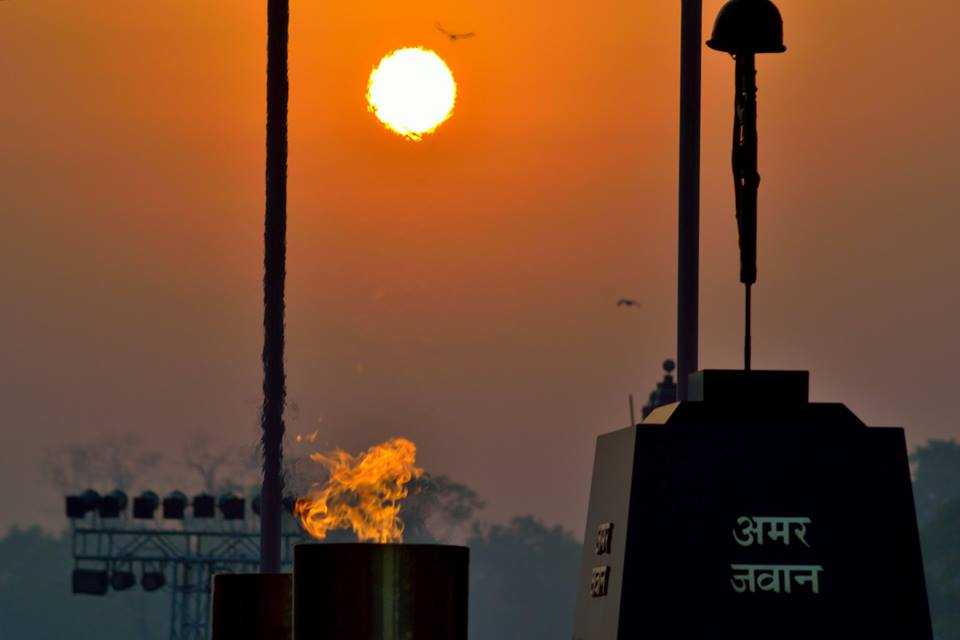
Amar Jawan Jyoti

Source : Google

‘Amar Jawan Jyoti’ the eternal flame is one significant addition to India Gate in 1971, dedicated to the soldiers who lost their lives in the Indo-Pak war of December 1971. Amar Jawan Jyoti burns day and night under the arc of India gate as a tribute to the Indian martyrs. The burning flame rises from a platform that has a black colored marble cenotaph with a rifle and a soldier’s helmet placed on the barrel. The word ‘Amar Jawan’ is inscribed in gold on all the sides of the cenotaph. There are total four flames on each side of the cenotaph, which are lit up only on Independence Day and Republic Day.  Liquefied petroleum gas was used to keep the eternal flame alive until 2006 after which it was lit up using piped natural gas.

Prime Minister Indira Gandhi fist paid homage to the Indian soldiers at India Gate on the eve of 23rd Republic Day on 26 January 1972. Since then, the Prime Minister of India pays tribute to the soldiers at this site along with the heads of Indian Armed Forces, before becoming the part of the annual parade held at Rajpath on each Republic Day. 

The India Gate or ‘All India War Memorial’ is one of the most iconic national monuments of India and stands high in the national capital of Delhi. Situated on Rajpath, the monument was built in the memory of 90,000 soldiers who lost their lives during the First World War and the Third Anglo-Afghan War. 42 meters high, constructed with pale stone, red stone and granite; India Gate is inspired by ‘Arc De Triomphe’ in Paris and was designed by the British architect Sir Edwin Lutyens. The flags of Indian Army, Indian Navy, and Indian Air force are put behind the India Gate to represent the power of Indian Military.

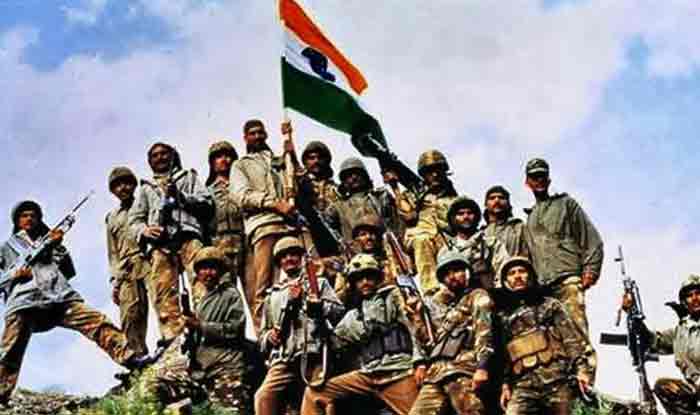
Kargil Vijay Diwas

On July 26, 1999, 18 years ago, India came out victorious in the Kargil war with the neighbouring country Pakistan. In order to commemorate India’s victory in the war, the Kargil Vijay Diwas is celebrated every year.

Source : Google

Kargil Vijay Diwas is observed to honour the war heroes and participants. Every year, the Army organises functions and events across the country. This day is celebrated all over India and in national capital, New Delhi, where the Prime Minister of India pays homage to the soldiers at Amar Jawan Jyoti at the India Gate every year.

The Indian soldiers had secured this victory after a three-month conflict that led to a loss of lives from both sides. The Indian side lost nearly 490 officers and soldiers.

The war took place between May and July of 1999 in Jammu and Kashmir’s Kargil district. The conflict is believed to have been orchestrated by the then Pakistan army chief General Pervez Musharraf without the knowledge of the then Pakistan Prime Minister Nawaz Sharif.

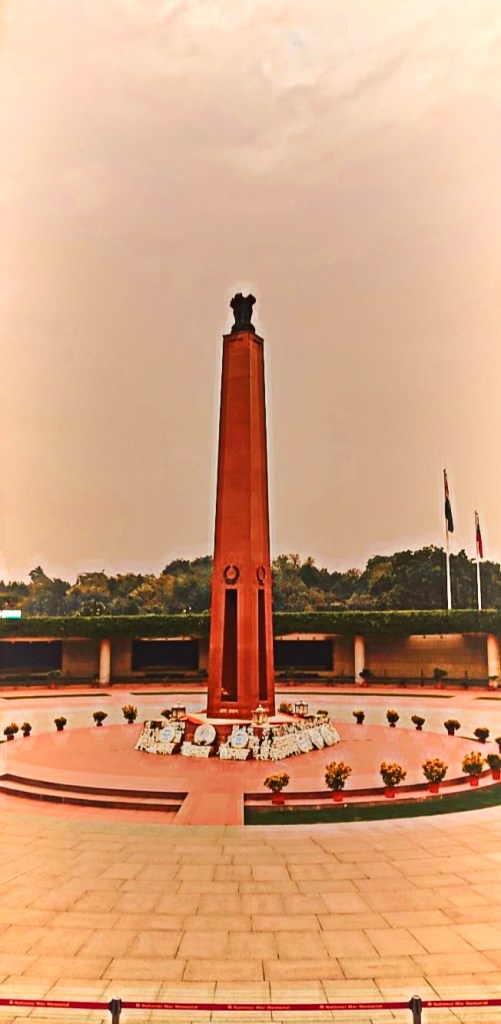
National War Memorial

Pic Credit : Mansi Shukla

The National War Memorial will be inaugurated today (February 25, 2019) by Prime Minister Narendra Modi near India Gate, New Delhi. It has been built as a tribute to the soldiers killed during the Indo-China War in 1962, the Indo-Pak Wars in 1947, 1965 and 1971, the Kargil Conflict in 1999, and the Indian Peace Keeping Force Operations in Sri Lanka.

All about the National War Memorial inauguration

  • Prime Minister Narendra Modi will inaugurate the National War Memorial today
  • PM Modi is expected to arrive at the site of the National War Memorial by 5:45pm
  • The National War Memorial will have a new ‘eternal flame’ positioned at the bottom of the stone-made obelisk (The existing eternal flame at the Amar Jawan Jyoti will continue to burn)
  • A rally of ex-servicemen at the Major Dhyan Chand National Stadium will take place before the unveiling ceremony
  • The defense minister and the service chiefs are expected to be present at the inauguration

National War Memorial entry fee and timings

The entry fee of the National War Memorial is free. So you do not have to pay anything.

You can visit the National War Memorial from 9 am to 6:30 pm (November to March) and from 9 am to 7:30 pm (April to October)

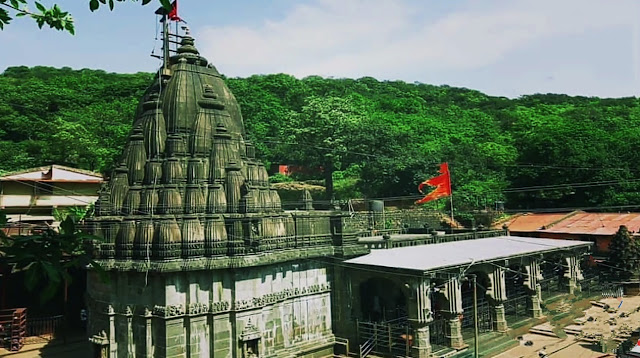
Bhimashankar Temple

Source : Google

Bhimashankar is located in the village of Bhorgiri, about 125 km from Pune, in Maharashtra, India in the Ghat region of the Sahyadri Mountains. It is the place where the Bhima river’s source can be found. This river finally merges with the Krishna River.

History :

There are different legends associated with the Bhimashankar Jyotirlinga. Here are two of them.

According to one legend, a demon called Tripurasura performed penance in the Bhimashankar jungle to please Lord Shiva and ask him for the gift of immortality. Lord Shiva was pleased with his devotion and granted him immortality on the condition that he would use his power to help the local people. Tripurasura agreed with Him. However, over time, he forgot his promise and began to harass both humans and the gods. When the gods begged Lord Shiva to do something to stop the ensuing chaos, the Lord prayed to his consort Goddess Parvati. Both of them appeared as Ardhanari Nateshwara and killed Tripurasura, after which peace prevailed.

According to another legend, in the Dakini forests on the ranges of the Sahyadri Mountains lived an asura (demon) named Bhima with his mother Karkati. He was, in fact, the son of Kumbharkarna, the younger brother of King Ravana. When he learnt that Lord Vishnu had killed his father in his avatar as Rama, he was furious. He vowed revenge and performed severe penance to please Lord Brahma.

In return, Brahma blessed him with immense strength, which he used to terrorize the world. He imprisoned an ardent devotee of Lord Shiva, Kamrupeshwar and demanded that he pray to him instead of Lord Shiva. When Kamrupeshwar refused to do so, Bhima raised his sword to destroy the Shivalinga. That is when Lord Shiva appeared before him and reduced him to ashes. The place where Lord Shiva manifested himself is the spot the Shivalinga is believed to be now.

The Bhimashankar temple is a testament to the skills of the Vishwakarma sculptors. It was built around the 13th century. Structures such as the shikhara (spires) were added by Maratha empire statesman, Nana Phadnavis, in the 18th century.

The Maratha ruler, Chhatrapati Shivaji Maharaj, is also believed to have facilitated worship here through his endowments.