
The Sino-Indian War between China and India occurred in October–November 1962. A disputed Himalayan border was the main cause of the war. There had been a series of violent border skirmishes between the two countries after the 1959 Tibetan uprising, when India granted asylum to the Dalai Lama.
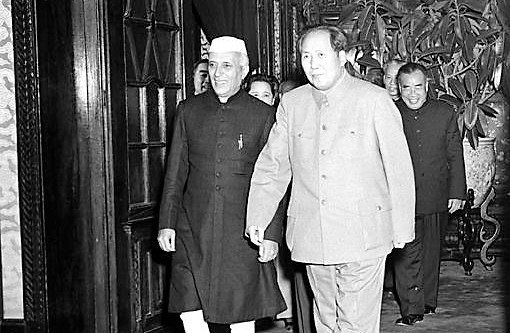
India never suspected that China would ever launch an attack, but it did. India was attacked on October 20, 1962 in what famously came to be known as Sino-India war of 1962. The belief of not ever being attacked by China did not let the Indian army prepare and the result was the standoff between 10,000-20,000 Indian troops and 80,000 Chinese troops. The war continued for about a month and ended on November 21, after China declared a ceasefire.
With a three-week ceasefire, the war lasted till November 21, when China unilaterally withdrew from Indian territories before the snow could block safe passage to its forces. Around 3,250 Indian soldiers were killed. India lost about 43,000 square kilometres of land, captured by China in Aksai Chin. It is of the size of Switzerland.
The Panchsheel was enunciated in the preamble to the Agreement (with exchange of notes) on trade and intercourse between Tibet Region of China and India. It was signed at Peking on April 29, 1954.
On July 1, 1954, former Prime Minister Jawaharlal Nehru stated in a note, “All our old maps dealing with the frontier should be carefully examined, and where necessary, withdrawn. New maps should be printed showing our northern and northeastern frontier without any reference to any ‘line’. These new maps should also not state there is any undemarcated territory.”
“Both as flowing from our policy and as a consequence of our Agreement with China, this frontier should be considered a firm and definite one which is not open to discussion with anybody,” Nehru added.
Zhou Enlai proposed ceasefire and offered a negotiated settlement. Enlai suggested that both India and China should disengage and withdraw their troops 20 km behind the present lines of actual control. Enlai proposed Chinese withdrawal in Arunachal Pradesh (NEFA) while suggesting that India and China should maintain status quo in Aksai Chin.
Zhou Enlai wrote another letter to Nehru making the same proposal. But, Nehru rejected the proposals saying that Chinese claim on Aksai Chin was illegal. Meanwhile, Soviet Union changed its stance from pro-India to say that the McMahon line was the notorious result of British imperialism. This is exactly China stated.
Parliament passed a resolution to “drive out the aggressors from the sacred soil of India.” Finally, on Nehru’s birthday – November 14, Sino-India war resumed. A week later, China declared unilateral ceasefire ending the war having occupied the Aksai Chin and withdrawn from the northeastern territories, where its forces had come down till Tezpur in Assam.
The 1962 war was jolt to India and Nehru. This led to reversal of defence policy of the country putting the Indian Army on the path of modernization. The greater emphasis on nuclear power and use of nuclear weapons became part of India’s defence policy.
 Healthy Happiness